Water is one of those things most people never think about until they suddenly cannot trust it. A boil-water advisory. A hurricane. Flooding. Power failure. Travel abroad. Backcountry exploration. Or simply realizing that water safety depends on more than whether water looks clear. Across the United States and around the world, governments, humanitarian organizations, municipalities, and emergency planners continue investing in one idea: Safe drinking water saves lives.
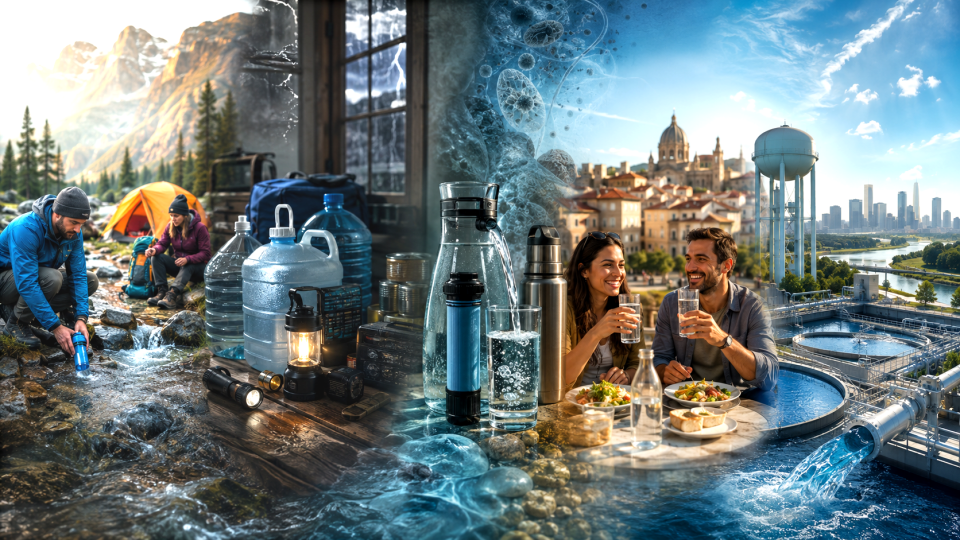
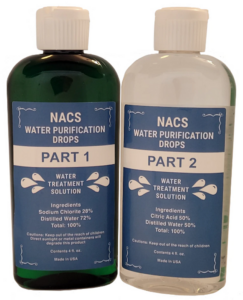
One of the tools that appears repeatedly in those conversations is chlorine dioxide. Not as a wellness product. Not as a cure. But as a water purification and disinfection technology used in controlled applications ranging from municipal systems to emergency response and portable purification products.
Different Water Sources Mean Different Challenges
One of the most overlooked realities of water purification is that different environments present different biological concerns.
| Water Situation | Common Concerns Often Considered |
| Mountain streams | Giardia, Cryptosporidium |
| Lakes and ponds | algae, environmental runoff |
| Rivers | agricultural and wildlife contamination |
| Municipal systems | infrastructure failures and microbial events |
| Emergency storage | stagnation and contamination |
| International travel | unfamiliar environmental organisms |
Water treatment strategies vary accordingly. No one tool solves every water problem.
Emergencies Are Where Preparation Becomes Visible
Many people first think seriously about water treatment after hearing: “Do not drink the water.” Power outages, storms, floods, freezing events, and damaged infrastructure sometimes lead to boil-water advisories.
EPA guidance commonly prioritizes boiling where possible and provides emergency disinfection guidance for situations where normal treatment is unavailable.
Preparedness communities often layer solutions:
- stored water
- filtration
- emergency purification
- sanitation practices
Not because disaster is expected, but because interruption eventually happens.
Why Chlorine Dioxide Became Important in Water Treatment
Modern water systems face a difficult challenge: Water must travel long distances while remaining biologically safe.
Treatment systems use different approaches depending on:
- source water quality
- infrastructure
- regulations
- target organisms
- environmental conditions
Chlorine dioxide became attractive in certain applications because it remains effective across a broad range of water conditions and is used as a drinking-water disinfectant in regulated systems.
Regulators also set limits for residual disinfectants and byproducts to maintain safety in treated water.
What Government and Public Organizations Say
U.S. Environmental Protection Agency (EPA)
EPA regulates public drinking-water systems and recognizes chlorine dioxide as one of the disinfectants used in water treatment under controlled standards. EPA establishes allowable residual levels and contaminant limits for treated water.
The Bureau of Reclamation focuses heavily on water reliability, storage, and infrastructure resilience in the western United States. Water treatment technologies are one part of maintaining dependable supplies.
U.S. Army Corps of Engineers (USACE)
USACE plays a major role in water infrastructure, emergency response, flood control, and recovery efforts where potable water continuity becomes essential.
U.S. Department of Agriculture (USDA)
USDA supports rural infrastructure and rural water initiatives through various programs and funding opportunities for eligible communities and projects.
Department of Housing and Urban Development (HUD)
HUD programs often intersect with community infrastructure and environmental quality initiatives including access to dependable utilities.
Economic Development Administration (EDA)
EDA supports community infrastructure projects that improve long-term economic resilience—including water-related investments.
World Health Organization (WHO)
WHO includes chlorine dioxide within drinking-water guidance discussions and emphasizes risk management, treatment performance, and protecting populations from waterborne disease.
UNICEF supports clean-water access globally and frequently emphasizes safe water as foundational to child health and development.
WaterAid works internationally to expand access to safe water, sanitation, and hygiene systems.
Water For People focuses on sustainable local water systems and long-term water access.
charity: water funds drinking-water projects around the world through infrastructure and community partnerships.
Water.org supports financing and access programs intended to expand reliable drinking-water availability.
Funding and Supporting Clean Water
Many people are surprised to learn that water support exists at multiple levels.
In the United States:
- eligible projects may qualify through federal, state, local, rural, or infrastructure programs
Globally:
- donations to organizations focused on water access help fund treatment systems, sanitation, wells, and long-term water reliability.
Clean water remains one of the highest-impact investments in public health.

Water rarely becomes important until it becomes uncertain. Then suddenly everything depends on it. The future of water may not belong to one technology. But the goal remains unchanged:
- Safe water.
- Reliable access.
- Prepared communities.
And the freedom that comes from turning questionable water into confidence.
Editorial Note
This article discusses chlorine dioxide only in the context of water purification and regulated sanitation applications. Water treatment methods differ by environment, contaminants, infrastructure, and public-health guidance.
Leave a Reply