Water is the single most important resource during an emergency. While food shortages may take days or weeks to become critical, the lack of safe drinking water can quickly become a serious health concern. Whether you’re preparing for a natural disaster, power outage, camping trip, international travel, or simply building a family emergency kit, understanding how to find, store, and purify water is one of the smartest investments you can make.
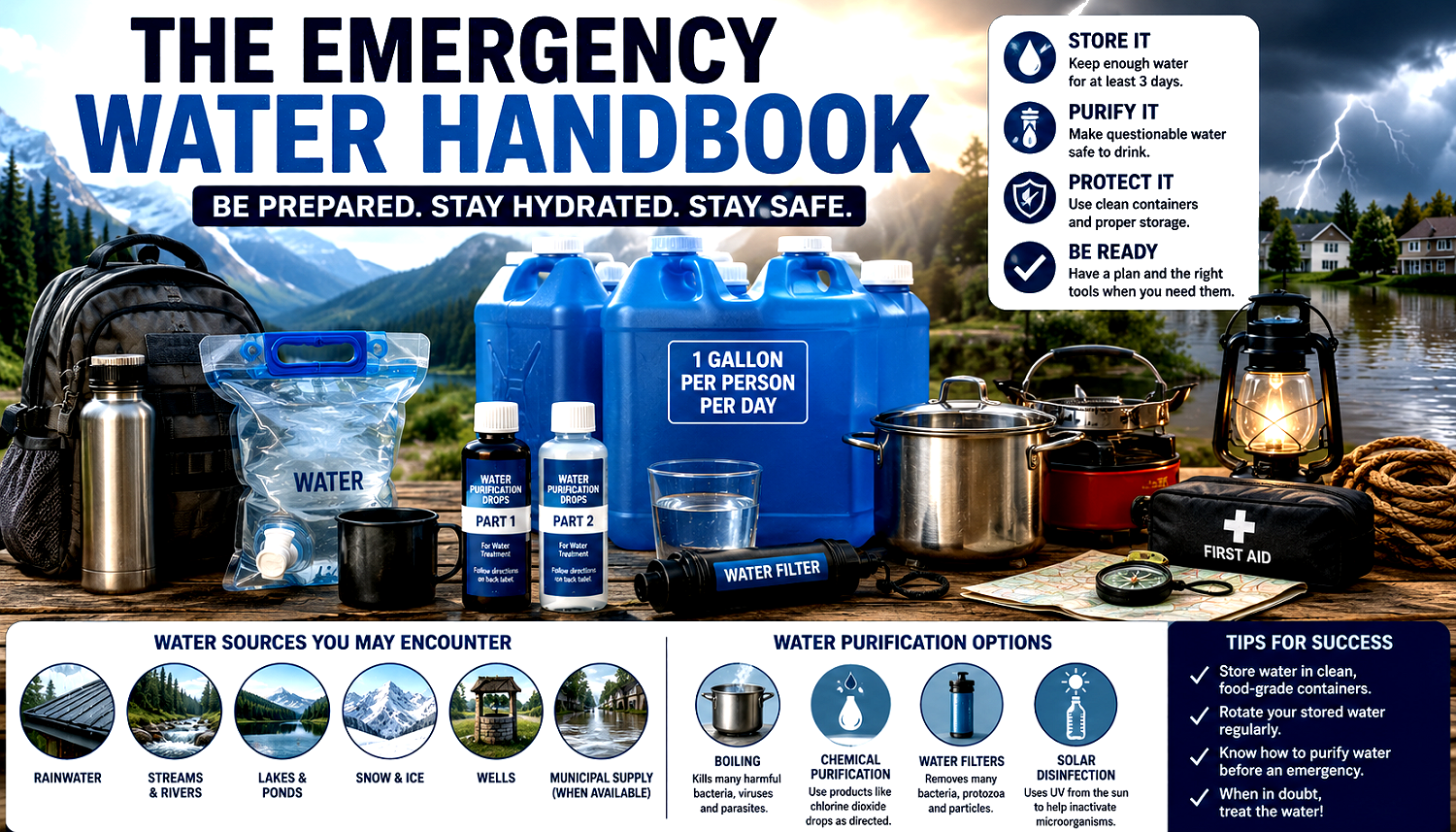
This handbook provides a practical overview of emergency water preparedness and the various methods available to help make questionable water safer to drink.
How Much Water Do You Need?
Emergency management agencies generally recommend storing at least one gallon of water per person per day.
This amount is intended to cover:
- Drinking
- Basic food preparation
- Minimal personal hygiene
Additional water may be needed for:
- Hot weather
- Nursing mothers
- Children
- Medical conditions
- Pets
Many preparedness experts recommend storing enough water for at least three days, while two weeks or more provides greater resilience during extended emergencies.
How Long Can You Survive Without Water?
Although individual circumstances vary greatly, most healthy adults can survive only a few days without adequate hydration.
Factors affecting water needs include:
- Temperature
- Physical activity
- Humidity
- Age
- Overall health
Even mild dehydration can affect:
- Judgment
- Concentration
- Coordination
- Mood
- Physical performance
Maintaining hydration is often one of the first priorities during any emergency.
Storing Emergency Water
The safest water is the water you’ve already stored before an emergency begins.
Good storage containers include:
- Food-grade plastic containers
- BPA-free water storage jugs
- Stainless steel containers
- Commercially bottled water
Store water:
- In a cool location
- Out of direct sunlight
- Away from chemicals
- Off concrete floors when possible
- With lids tightly sealed
Choosing the Right Containers
Not every container is suitable for long-term water storage.
Recommended:
- Food-grade HDPE containers
- Commercial water bricks
- Stainless steel bottles
- Glass containers (when breakage is not a concern)
Avoid using containers that previously held:
- Chemicals
- Fuel
- Pesticides
- Cleaning products
- Non-food liquids
Even thorough washing may not remove all residues.
Rotating Stored Water
Water itself does not “expire,” but storage containers and environmental conditions can affect quality over time.
Many preparedness plans recommend periodically inspecting stored water for:
- Container damage
- Seal integrity
- Cloudiness
- Odors
- Visible contamination
Commercial bottled water should also be rotated according to manufacturer recommendations.
Finding Water During an Emergency
Potential water sources include:
- Stored emergency water
- Municipal supplies (when available)
- Rainwater collection
- Streams
- Rivers
- Lakes
- Springs
- Melted snow
- Ice
- Household water heaters (if appropriate)
- Toilet tanks (not bowls) that contain clean, untreated water
Whenever the safety of a source is uncertain, purification should be considered before drinking.
Boiling Water
Boiling is one of the oldest and most widely recommended methods of emergency water treatment.
General guidance includes:
- Bring water to a rolling boil.
- Maintain the boil according to current public health recommendations.
- Allow water to cool naturally before drinking.
Boiling can help inactivate many disease-causing microorganisms.
However, boiling does not remove:
- Heavy metals
- Chemical contaminants
- Pesticides
- Petroleum products
- Dissolved salts
Chemical Water Purification
Chemical treatment offers another portable option when heat or electricity is unavailable.
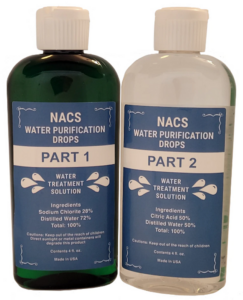
Several products are commonly used for emergency water treatment, including chlorine dioxide-based purification solutions.
When used according to product directions, chlorine dioxide is widely used for treating water by reducing many harmful microorganisms that may be present in questionable water sources.
Advantages often include:
- Lightweight
- Compact
- Long shelf life
- No electricity required
- Easy to pack for travel
- Useful for camping and emergency kits
Always follow the manufacturer’s instructions regarding activation, dosage, contact time, and intended use.
Water Filters
Portable water filters are popular among hikers and backpackers.
Benefits may include:
- Immediate filtration
- Improved taste
- Lightweight options
- Long service life
Depending on design, filters may vary in what they remove. Understanding the capabilities and limitations of a specific filter is important when selecting one for emergency use.
Rainwater Collection
Rainwater can be an excellent emergency resource when collected properly.
Good collection surfaces include:
- Clean tarps
- Food-grade collection systems
- Purpose-built rain barrels
Avoid collecting runoff from contaminated roofs or surfaces whenever possible.
Stored rainwater should be appropriately treated before drinking if its safety is uncertain.
Melting Snow
Snow can provide emergency water in cold environments.
A few tips:
- Collect clean, fresh snow whenever possible.
- Melt snow before drinking rather than eating it directly.
- Eating large amounts of snow may contribute to heat loss.
- Melted snow may still require treatment if contamination is possible.
Solar Water Disinfection
In sunny environments, solar disinfection (often called SODIS) has been studied as a low-cost method of reducing certain microorganisms in clear water using sunlight and transparent plastic bottles.
Its effectiveness depends on factors such as:
- Water clarity
- Sunlight intensity
- Exposure time
- Appropriate containers
Solar disinfection may be useful in some circumstances but generally requires favorable environmental conditions and careful adherence to established guidance.
Safe Water During International Travel
Travelers frequently encounter unfamiliar water systems.
Potential exposure can occur through:
- Tap water
- Ice cubes
- Fresh produce
- Brushing teeth
- Fountain drinks
- Street vendors
Many experienced travelers carry portable purification methods as part of their travel kit, providing an additional option when water quality is uncertain.
Building a Water Preparedness Kit
A well-rounded emergency water kit might include:
- Stored drinking water
- Portable water purification solution
- Water filter
- Stainless steel bottle
- Collapsible water container
- Metal pot for boiling
- Waterproof matches or lighter
- Camp stove or heat source
- Water collection bag
- Food-grade storage containers
Preparation is less about expecting disaster than about having options when circumstances change.
Frequently Asked Questions
How much water should I store?
At least one gallon per person per day is commonly recommended, with additional supplies for extended emergencies and special needs.
Is clear water always safe?
No. Water may appear clean while containing microorganisms or contaminants that cannot be seen.
Which purification method is best?
Each method has strengths and limitations. Many preparedness experts recommend understanding multiple methods so you have options under different circumstances.
Should I rely on only one purification method?
Many emergency planners prefer a layered approach, combining safe storage with backup treatment methods appropriate to the situation.
Final Thoughts
Water preparedness is not about fear—it’s about confidence.
Whether you’re preparing for severe weather, a power outage, international travel, a wilderness adventure, or simply building a family emergency plan, understanding safe water practices gives you one less thing to worry about when plans change.
The best emergency water plan is the one prepared before it’s needed. With a little knowledge, thoughtful planning, and the right equipment, you can help ensure that safe drinking water remains available wherever life takes you.
Leave a Reply