Water is one of life’s greatest necessities. It nourishes us, grows our food, sustains our communities, and connects every corner of the planet. Yet while water is universal, the challenges surrounding safe drinking water are anything but.
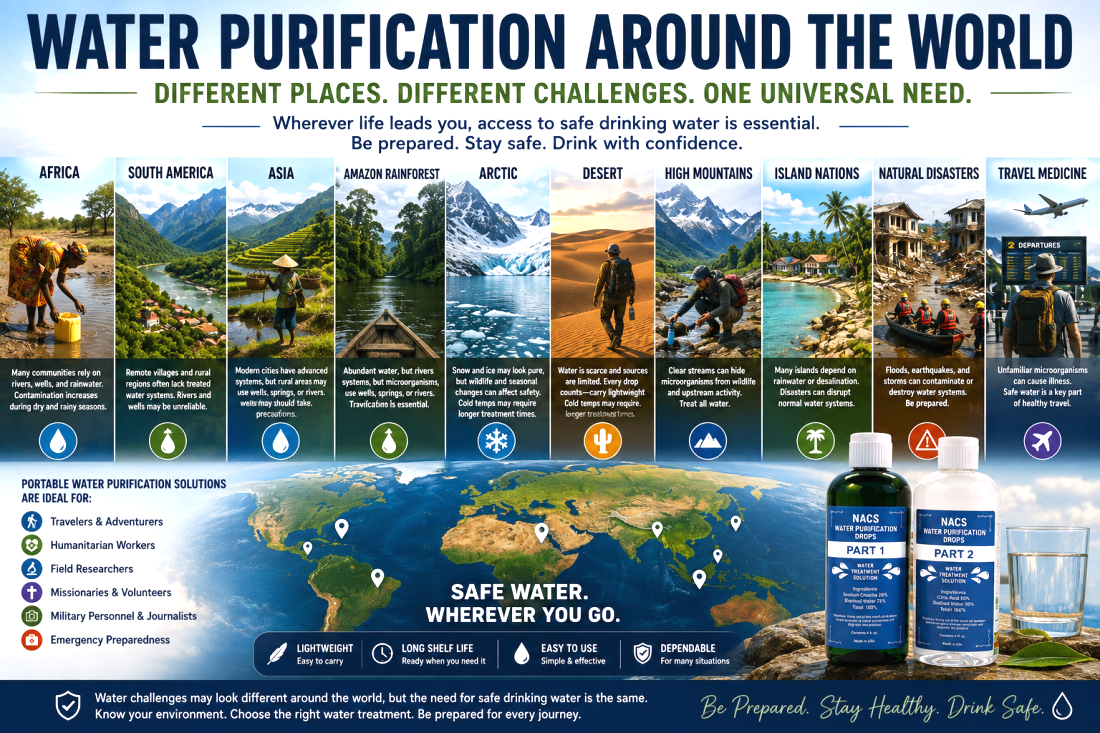
A crystal-clear mountain stream may appear perfectly safe while harboring microscopic organisms. A village well may become contaminated after seasonal flooding. A traveler visiting another country may encounter unfamiliar microorganisms that local residents have developed some immunity to over time.
Around the world, access to safe drinking water depends on geography, climate, infrastructure, and natural events. Understanding these differences helps explain why portable water purification solutions have become valuable tools for campers, international travelers, humanitarian workers, and emergency preparedness professionals alike.
One World. Many Water Challenges.
Every region presents its own unique water concerns. Some areas struggle with seasonal flooding. Others face drought. Some have abundant freshwater but limited treatment infrastructure. Others have modern water systems that may become compromised during hurricanes, earthquakes, or other disasters.
No single solution fits every environment. That’s why water purification methods are selected based on local conditions and the quality of the available water.
Africa
Across much of Africa, access to safe drinking water remains a daily challenge for many communities.
People may rely on:
- rivers
- shallow wells
- seasonal ponds
- rainwater collection
During dry seasons, water sources can become scarce. During rainy seasons, runoff may increase contamination risks.
Portable water purification solutions are commonly used by humanitarian organizations, medical teams, field researchers, missionaries, and travelers working in remote locations where treated municipal water may not be consistently available.
South America
South America contains some of the world’s most abundant freshwater resources. Yet many remote communities remain far from centralized water treatment facilities.
Travelers exploring rural regions may encounter untreated water sources, making portable water treatment an important consideration.
Mountain villages, rainforest communities, and isolated agricultural regions often present very different water challenges despite existing within the same country.
The Amazon Rainforest
At first glance, the Amazon appears to have unlimited water. In reality, finding safe drinking water can be surprisingly difficult.
Rivers may contain:
- sediment
- decaying vegetation
- microorganisms
- runoff from surrounding environments
Expedition teams, researchers, photographers, and eco-tourists often prepare for these conditions by carrying portable water treatment equipment appropriate for remote environments.
Abundant water does not always mean safe drinking water.
Asia
Asia encompasses an enormous range of climates and living conditions. Modern cities may provide highly developed municipal water systems, while remote villages rely on wells, springs, or rivers.
International travelers frequently choose bottled water or carry portable water purification options when visiting areas where they are uncertain about local water quality.
Even when water is considered safe for local residents, visitors may prefer additional precautions while adjusting to unfamiliar environments.
High Mountain Regions
Mountain streams often appear crystal clear. That appearance can be deceiving. Wildlife, livestock, and upstream human activity may introduce microorganisms into otherwise beautiful water sources.
Backpackers, climbers, and wilderness hikers commonly combine water filtration and water purification methods depending on their destination and the conditions they encounter.
Clean-looking water should never be judged by appearance alone.
Desert Environments
In deserts, the greatest challenge is often finding water at all.
When water is located, it may come from:
- springs
- stock tanks
- temporary pools
- collected rainwater
Because opportunities to refill are limited, travelers often plan carefully and carry lightweight purification supplies that add minimal weight to already heavy packs.
Every ounce matters in desert travel.
The Arctic
Cold environments create a different set of challenges. Snow and ice may appear pristine, yet melting them does not automatically produce microbiologically safe drinking water.
Wildlife activity and seasonal thawing can affect water quality.
Cold temperatures may also influence the amount of time needed for certain purification methods to work, making careful planning especially important during winter expeditions.
Island Nations
Many island communities depend heavily on rainfall, groundwater, or desalination systems. After hurricanes, tropical storms, volcanic activity, or earthquakes, normal water infrastructure can be disrupted.
Portable water purification supplies can provide an additional layer of preparedness until regular services are restored.
For travelers visiting small islands, compact water treatment products also take up very little luggage space.
Natural Disasters
Natural disasters can affect safe drinking water almost anywhere. Floods may overwhelm treatment plants. Earthquakes can damage pipelines. Hurricanes may contaminate wells. Wildfires can impact watersheds.
In many emergency preparedness plans, access to safe drinking water is one of the highest priorities during the first several days following a disaster.
Because water purification drops are compact, lightweight, and easy to store, many households include them as part of their emergency kits alongside stored water, food, first aid supplies, flashlights, and emergency radios.
Travel Medicine and International Travel
Travel medicine specialists often encourage travelers to think about food and water safety before leaving home.
Depending on the destination, travelers may choose:
- bottled water
- sealed beverages
- portable water filters
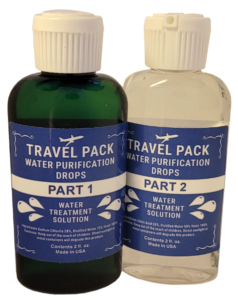
- water purification solutions
These preparations are not necessarily because local water systems are unsafe.
Rather, they help reduce the risk of exposure to unfamiliar microorganisms while traveling in new environments.
For adventure travelers, humanitarian workers, missionaries, military personnel, journalists, photographers, and international volunteers, portable water purification products have become common additions to travel gear.
Choosing the Right Water Treatment Solution
Different situations call for different tools. Some travelers prefer portable water filters. Others carry water purification drops. Many experienced outdoor enthusiasts carry both, using each where its particular strengths are most useful.
The goal is always the same: Access to safe drinking water wherever life leads.
A Global Need, A Practical Solution
Although water challenges vary dramatically from one region to another, the need for safe drinking water is universal.
Whether hiking through alpine wilderness, volunteering in rural communities, crossing desert landscapes, exploring tropical rainforests, responding to natural disasters, or simply traveling abroad, understanding local water conditions is an important part of staying healthy.
Portable water purification solutions have earned a place in emergency preparedness kits, travel bags, and outdoor equipment because they are compact, lightweight, and designed to help people prepare for situations where access to treated drinking water may be limited.
No matter where the journey begins, one truth remains constant:
Safe water is one of the world’s most valuable resources—and being prepared to treat it responsibly is one of the smartest investments any traveler or adventurer can make.

Educational Notice
This article is provided for educational and informational purposes only. Water quality varies widely depending on location and environmental conditions. Water purification products should always be used according to the manufacturer’s instructions, and no single method is appropriate for every water source or circumstance. Travelers should consult current public health guidance and local recommendations when planning for safe drinking water in unfamiliar environments.
Leave a Reply